

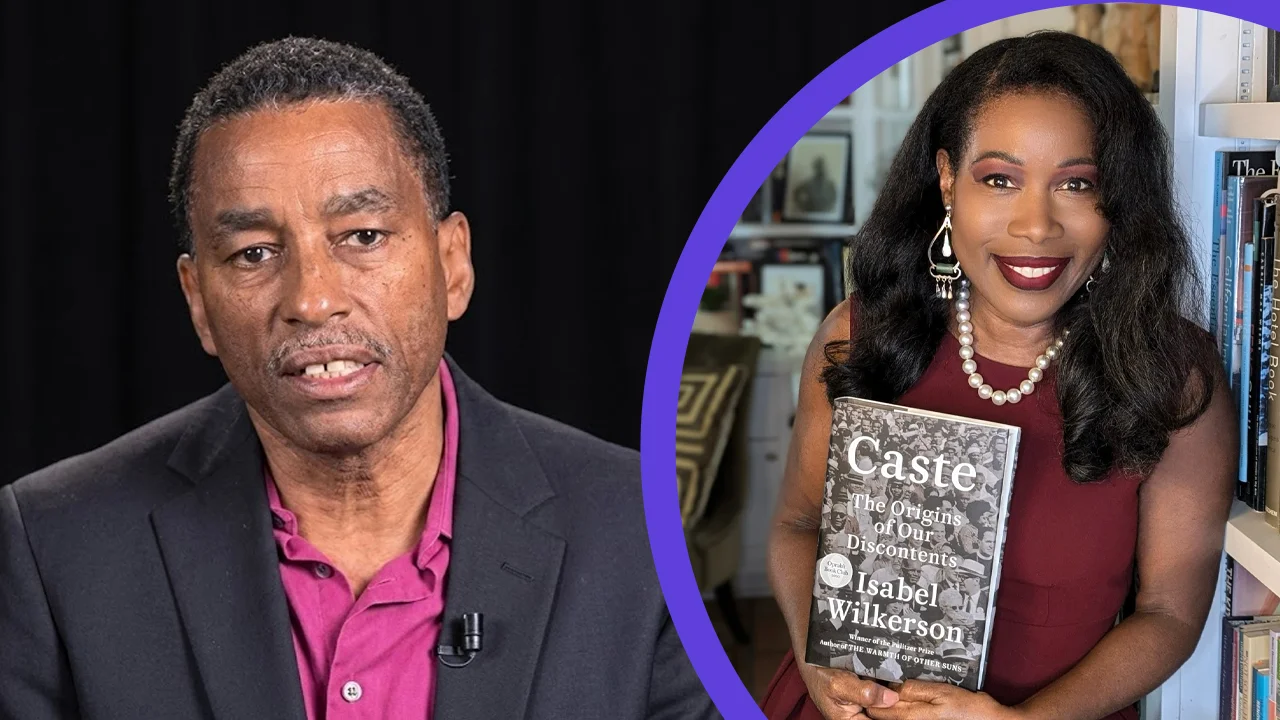
Roderick Jeffrey Watts is best known in academic and public discussions as Roderick J. Watts, a respected psychologist, scholar, educator, and professor emeritus whose work connects psychology with social justice, identity, liberation, and community empowerment. His contributions are especially important in areas such as sociopolitical development, critical consciousness, youth activism, African American men’s development, and community-based research.
Introduction
Roderick Jeffrey Watts is a name that often appears in searches connected with psychology, social justice, community development, and public academic work. In professional and institutional spaces, he is more commonly identified as Roderick J. Watts, a scholar whose work has helped shape conversations about how people understand inequality, develop political awareness, and move from awareness toward meaningful action. Unlike figures who become known mainly through media visibility, Watts represents a quieter but deeply influential kind of public intellectual: one whose impact comes through scholarship, teaching, mentoring, research, and community engagement. His academic career reflects an important question that remains relevant today: how do individuals and communities understand oppression, build confidence, form identity, and work toward social transformation? This question places Watts within the wider tradition of community psychology, liberation psychology, and social justice-oriented research.
Who Is Roderick Jeffrey Watts?

Roderick Jeffrey Watts can be understood as an American psychologist and academic whose professional identity is strongly connected with the study of social power, identity, youth development, and civic action. He is not simply a psychologist in the traditional sense of studying individual thoughts or emotions in isolation. Instead, his work emphasizes that human behavior must be understood within social, political, cultural, and historical contexts. This means that people’s mental health, personal growth, confidence, and sense of possibility are shaped not only by private experiences but also by public conditions such as racism, inequality, economic pressure, community resources, education, and access to power. This broader view makes his work especially useful for students, researchers, activists, educators, and community organizations that want to understand how psychology can contribute to justice and empowerment.
Academic Identity and Professional Background
A major part of the public identity of Roderick Jeffrey Watts comes from his academic career. He has been associated with the City University of New York Graduate Center, where he is recognized as professor emeritus. His professional profile shows a strong connection to psychology, Africana studies, community-based work, and critical approaches to social research. His academic background includes training in clinical-community psychology, a field that combines concern for individual well-being with attention to communities, institutions, and social systems. This background matters because it helps explain why his scholarship does not treat psychological problems as merely personal weaknesses. Instead, his work encourages readers to ask how social conditions create barriers, how communities respond to those barriers, and how people can develop the awareness and skills needed to challenge unjust systems.
Roderick Jeffrey Watts and Community Psychology
One of the most important areas connected with Roderick Jeffrey Watts is community psychology. Community psychology differs from more individual-focused forms of psychology because it studies people within the environments, neighborhoods, institutions, and relationships that shape their lives. A community psychologist may examine schools, youth programs, nonprofit organizations, cultural groups, civic spaces, or social movements to understand how people develop and how communities can become healthier and more powerful. Watts’s work fits strongly within this tradition because he has focused on youth activism, civic engagement, community organizing, African American male development, and liberation-oriented practice. His approach reminds readers that psychology can be more than diagnosis and treatment; it can also be a tool for understanding injustice, strengthening communities, and supporting people as agents of change.
The Meaning of Sociopolitical Development
A central concept associated with Roderick Jeffrey Watts is sociopolitical development. This idea refers to the process through which people learn to understand social and political systems, recognize injustice, develop a critical view of inequality, and build the capacity to take action. In simple words, sociopolitical development is about how a person moves from simply experiencing unfairness to understanding why unfairness exists and what can be done about it. For young people especially, this process can be powerful. A student who experiences discrimination may first feel confusion or frustration, but through education, mentoring, dialogue, and community involvement, that student may begin to understand broader patterns of inequality. From there, the student may become involved in civic action, community service, organizing, leadership, or advocacy. Watts’s contribution is important because he helped frame this development as a psychological and social process, not just a political one.
Critical Consciousness and Social Awareness
Another key idea connected with Roderick Jeffrey Watts is critical consciousness. This concept is closely associated with the ability to recognize oppression, analyze social conditions, and act against injustice. In Watts’s work, critical consciousness is not simply about being angry at society or noticing problems. It is a deeper process that includes reflection, emotional growth, identity formation, and practical action. A person with critical consciousness does not only ask, “Why am I facing difficulty?” but also asks, “What social forces are shaping this difficulty, who benefits from these conditions, and how can people work together to create change?” This makes critical consciousness especially important in education, youth development, social work, psychology, and community leadership. Watts’s scholarship helps show that awareness alone is not enough; awareness becomes meaningful when it supports courage, responsibility, and collective action.
Liberation Psychology and Human Development
Liberation psychology is another major theme in the work of Roderick Jeffrey Watts. Liberation psychology challenges the idea that psychology should remain neutral when people are living under unjust conditions. Instead, it argues that psychology should help people understand oppression and support their movement toward dignity, freedom, and self-determination. Watts’s work reflects this perspective by linking mental health and identity with social realities. For communities that experience racism, poverty, exclusion, or political marginalization, liberation psychology offers a way to understand pain without blaming the victim. It also emphasizes resilience, culture, history, and collective strength. Through this lens, healing is not only a private emotional process; it can also involve reclaiming identity, building supportive relationships, developing political awareness, and participating in community change.
Work With Youth and Civic Engagement
A major part of Roderick Jeffrey Watts’s scholarly influence is connected with youth development and youth activism. Young people are often discussed as future citizens, but Watts’s work helps present them as active thinkers and participants in the present. His interest in youth sociopolitical development shows that young people can analyze injustice, understand power, and contribute to their communities when they are given meaningful opportunities. This is especially important in societies where youth voices are often dismissed as immature or emotional. Watts’s approach suggests that young people’s anger, hope, confusion, and questions can become part of a healthy developmental process when guided through dialogue, mentoring, education, and organizing. Youth civic engagement, in this sense, is not only about voting or volunteering; it is also about learning how society works and how collective action can reshape it.
African American Men’s Development
Another important area associated with Roderick Jeffrey Watts is the development of African American men. His work has paid attention to masculinity, identity, social pressure, cultural expectations, and the challenges faced by African American males in unequal social systems. This area of study is significant because public discussions about Black men have often been shaped by stereotypes, fear, or deficit-based assumptions. A more responsible psychological approach asks how history, racism, community conditions, family structures, education, policing, employment, and cultural identity shape the lives of African American men. Watts’s work contributes to a more human and contextual understanding. It recognizes struggle, but it also recognizes strength, leadership, cultural grounding, emotional complexity, and the need for supportive spaces where men can reflect, heal, and develop.
Research, Teaching, and Mentorship
The academic influence of Roderick Jeffrey Watts is not limited to published research. Like many respected scholars, his work also includes teaching, mentoring, consultation, and collaboration with community organizations. His teaching interests have included areas such as program evaluation, African American psychology, qualitative research methods, and consultation. These subjects show the practical nature of his academic vision. Program evaluation, for example, helps organizations understand whether their work is actually helping people. Qualitative research allows scholars to listen closely to lived experiences, stories, meanings, and community voices. Consultation connects academic knowledge with real-world practice. Together, these areas show that Watts’s career has not been only theoretical. It has been connected with real people, real organizations, and real social challenges.
Why Roderick Jeffrey Watts Matters Today
The work of Roderick Jeffrey Watts remains highly relevant because modern societies continue to struggle with inequality, identity conflict, racial injustice, youth disengagement, and distrust in institutions. Many people today feel that social systems are difficult to understand and even harder to change. Watts’s ideas offer a useful framework for thinking about these problems. His work suggests that people need more than information; they need spaces where they can interpret their experiences, connect personal struggles to broader patterns, develop emotional strength, and learn how to act with others. This is important in schools, universities, youth programs, social justice organizations, counseling settings, and community leadership spaces. In a time when many discussions about inequality become polarized or shallow, Watts’s work offers depth, structure, and a psychologically informed path toward action.
Public Interest in His Name
The name Roderick Jeffrey Watts also receives public attention because it appears in connection with broader public records and biographical searches. However, the strongest and most meaningful way to understand him is through his professional work as Roderick J. Watts, a psychologist and scholar. Many online searches focus on personal associations, but reducing him to a personal connection would miss the larger significance of his career. His academic identity stands on its own. His work in sociopolitical development, critical consciousness, liberation psychology, and community psychology provides a serious contribution to how scholars and practitioners understand human development under conditions of inequality. For this reason, a balanced article about him should focus not on gossip-style curiosity but on his intellectual and professional contributions.
His Approach to Psychology
The psychology represented by Roderick Jeffrey Watts is broad, socially aware, and deeply connected to lived experience. Instead of separating the individual from society, his approach places the person inside a network of relationships, histories, institutions, and power structures. This kind of psychology asks different questions from traditional models. It asks how oppression affects identity, how young people learn to interpret injustice, how communities build strength, how cultural identity supports development, and how awareness can lead to action. This approach is valuable because it avoids two extremes. It does not ignore personal responsibility, but it also does not pretend that people develop in a social vacuum. It recognizes that human growth is both personal and political, both emotional and social, both individual and collective.
Contribution to Social Justice Scholarship
Roderick Jeffrey Watts has contributed to social justice scholarship by helping connect psychology with the language of liberation, empowerment, and civic action. Social justice scholarship is not only about identifying unfairness; it is also about understanding how unfairness becomes built into institutions and how people can respond to it. Watts’s work is important because it provides concepts that researchers and practitioners can use. Sociopolitical development helps explain the growth of political awareness. Critical consciousness helps explain the movement from awareness to analysis and action. Liberation psychology helps frame healing and development in relation to dignity and freedom. These ideas are useful because they give structure to experiences that many people feel but may not know how to name.
Lessons From His Work
There are several important lessons that can be drawn from the work of Roderick Jeffrey Watts. First, personal development cannot be fully understood without social context. Second, injustice affects not only material conditions but also identity, confidence, emotion, and imagination. Third, young people are capable of serious social analysis when they are supported and respected. Fourth, communities are not only sites of problems; they are also sites of wisdom, resistance, healing, and leadership. Fifth, psychology can serve a public purpose when it listens to lived experience and supports people in building more just conditions. These lessons make Watts’s work useful beyond academic psychology. Educators, youth workers, counselors, activists, nonprofit leaders, and students can all benefit from the ideas associated with his scholarship.
Conclusion
Roderick Jeffrey Watts is best understood as a thoughtful psychologist, scholar, educator, and public intellectual whose work connects human development with justice, identity, and social action. Professionally known as Roderick J. Watts, he has made meaningful contributions to community psychology, liberation psychology, critical consciousness, and sociopolitical development. His work encourages people to look beyond individual behavior and consider the social conditions that shape people’s lives. It also reminds us that awareness of injustice can become a source of growth, courage, leadership, and collective change. In a world where inequality remains deeply present, the ideas connected with Watts continue to offer a powerful message: psychology should not only explain human suffering but also help people and communities move toward dignity, freedom, and transformation.
FAQs About Roderick Jeffrey Watts
1. Who is Roderick Jeffrey Watts?
Roderick Jeffrey Watts is commonly known professionally as Roderick J. Watts, a psychologist, scholar, and professor emeritus whose work focuses on community psychology, youth development, liberation psychology, social justice, and sociopolitical awareness.
2. What is Roderick Jeffrey Watts known for?
He is known for his work on sociopolitical development, critical consciousness, youth civic engagement, African American men’s development, community organizing, and the relationship between social awareness and action.
3. What does sociopolitical development mean?
Sociopolitical development refers to the process through which people learn to understand social systems, recognize injustice, develop critical awareness, and build the confidence and ability to take meaningful action in their communities.
4. Why is Roderick Jeffrey Watts important in psychology?
He is important because his work connects psychology with real social issues such as racism, inequality, identity, oppression, youth activism, and liberation. His scholarship helps show that mental and emotional development are deeply shaped by social conditions.
5. Is Roderick Jeffrey Watts only known because of public biographical searches?
No. While his name may appear in public searches for different reasons, his strongest public importance comes from his academic and professional contributions as Roderick J. Watts, especially in psychology, social justice research, and community-based scholarship.
You May Also Read
for more visit wirebusiness.co.uk
